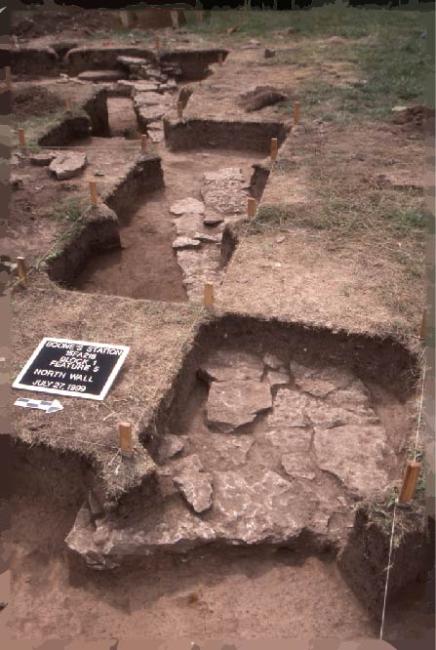
The history of the William S. Webb Museum of Anthropology & Office of State Archaeology is closely tied to the development of anthropology and archaeology at the University of Kentucky and to the growth of archaeological research and preservation across the Commonwealth.
Early Anthropology and Archaeology at the University of Kentucky
In 1927, the University of Kentucky created the Department of Archaeology and Anthropology in the College of Arts and Sciences. The new department reflected a growing recognition that Kentucky was rich in archaeological materials and that the University had an important role to play in documenting, studying, and preserving that heritage.
Two early University of Kentucky scholars were central to this work: physicist William S. Webb and zoologist William D. Funkhouser. Although trained in other fields, Webb and Funkhouser shared a strong interest in archaeology and helped pioneer the study of pre-contact cultures in Kentucky. Their research, fieldwork, and collecting activities helped establish the foundation for archaeological scholarship at the University and created the need for a permanent place to care for the growing body of materials recovered through archaeological investigations.
Founding of the Museum of Anthropology
The Museum of Anthropology was established at the University of Kentucky in 1931 to house and care for archaeological collections associated with this early research. Some of the Museum’s earliest accessions date to the 1920s and include materials collected during the years when Webb and Funkhouser were helping define Kentucky archaeology as a field of study.
In 1934, William Haag was hired as custodian of the Museum, marking an important step in the formal care and management of the University’s archaeological collections. Over time, the Museum became an essential resource for faculty, students, researchers, and professional archaeologists working to understand Kentucky’s deep and complex past.
The Museum’s collections grew significantly through major archaeological investigations in the twentieth century, including large-scale excavations supported by federal work programs during the Great Depression. These projects produced collections and documentation that continue to support research, teaching, and interpretation today.
Growth of Archaeological Collections and Research
As archaeological research expanded across Kentucky, the Museum became the primary repository for archaeological collections from the Commonwealth. Its holdings include materials from academic research, public projects, and professional archaeological investigations. These collections preserve physical evidence of Kentucky’s long human history and provide an irreplaceable foundation for research, education, and responsible heritage stewardship.
The Museum’s role also evolved alongside changes in American archaeology. During the twentieth century, archaeological work increasingly intersected with public planning, infrastructure development, historic preservation, and cultural resource management. As more archaeological investigations were conducted in advance of public projects and development, the need for long-term curation, documentation, and access to archaeological records increased.
Today, the William S. Webb Museum of Anthropology is one of Kentucky’s most significant archaeological repositories. Its collections support research by students, faculty, professional archaeologists, public agencies, and visiting scholars, while also providing opportunities for education, exhibits, and public engagement.
The Kentucky Antiquities Act and State Archaeological Responsibilities
A major turning point came in 1962 with the passage of the Kentucky Antiquities Act. The Act established the Commonwealth’s public policy to preserve archaeological sites and objects of antiquity for the public benefit and assigned important responsibilities to the University of Kentucky Department of Anthropology. These responsibilities included the reporting of archaeological sites and the permitting of archaeological investigations on lands owned or controlled by the Commonwealth, state agencies, counties, or municipalities.
At first, these responsibilities were carried out through the Museum and the Department of Anthropology. As the scale of archaeological reporting, records management, and compliance work increased, the University created a more formal structure to support these public-service obligations.
Creation of the Office of State Archaeology
The Office of State Archaeology was established in 1976 within the Department of Anthropology, with R. Berle Clay hired as State Archaeologist. OSA became responsible for maintaining archaeological site records for Kentucky and supporting the University’s role under the Kentucky Antiquities Act.
As archaeological research and cultural resource management expanded, OSA became an essential source of information for agencies, professional archaeologists, researchers, planners, and the public. Archaeological sites recorded across Kentucky are documented in the state site files and incorporated into modern records systems, including geographic information systems that support planning, review, and preservation.
In 1996, the Office of State Archaeology and the William S. Webb Museum of Anthropology were merged administratively, reflecting the close relationship between archaeological collections, site documentation, research, and public service.
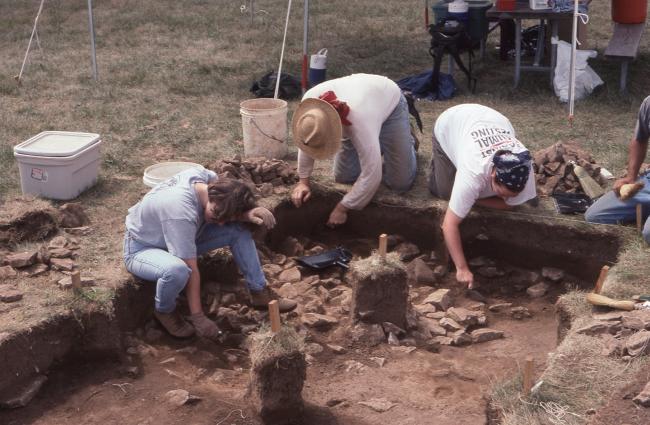
Digital Records, Compliance, and Public Service
Beginning in the late twentieth century and continuing into the present, OSA has worked to modernize Kentucky’s archaeological records. Paper maps and site files have increasingly been incorporated into digital databases and geographic information systems, allowing archaeological information to support a wide range of planning and research needs.
OSA maintains records for more than 30,000 archaeological sites across Kentucky. These records help inform transportation projects, public infrastructure, state and federal agency planning, academic research, environmental review, and preservation decision-making. Because archaeological site information can be sensitive, OSA provides access through formal review and request processes designed to balance transparency, professional use, public service, and resource protection.
WSWMA & OSA Today
Today, the William S. Webb Museum of Anthropology & Office of State Archaeology serves as a public-facing research, collections, compliance, and education unit within the University of Kentucky College of Arts & Sciences. In 2024, the unit moved from the Department of Anthropology to the direct administration of the College of Arts & Sciences Dean’s Office, reflecting its broad responsibilities to the University, the Commonwealth, agencies, researchers, students, and the public.
WSWMA & OSA continues to build on nearly a century of archaeological work at the University of Kentucky. The Museum cares for archaeological, archival, and documentary collections that preserve the material record of Kentucky’s past. OSA maintains the state archaeological site files, supports compliance with the Kentucky Antiquities Act, and provides information and guidance to professional archaeologists, agencies, researchers, landowners, and members of the public.
Together, these units help ensure that Kentucky’s archaeological heritage is documented, preserved, studied, and shared responsibly. Their work connects the University’s research and teaching missions with its public-service responsibility to the Commonwealth and helps make archaeological knowledge available for future generations.